

Parent Resources
Weather Closings
In the event Archild has to close due to severe weather, we will post the annoucement on the following channels: KARK4, KATV7, KLRT16, KASN38 and KARZ42.
Holiday Schedule:
Archild is closed in observation of the following holidays throughout the year:
-
- New Year’s Day
- MLK Day
- Memorial Day
- Indepdence Day
- Labor Day
- Thanksgiving Day
- Christmas Day
Parent Handbook
An essential guide to help you and your child have a successful time at Archild. The purpose of this handbook is to provide you with information about our school and its programs, educational practices, personnel, student rights and responsibilities, discipline policies and more. We hope this handbook helps you better understand how Archild can best serve your child as the provider of their special education and childcare program.
School Menus
Under the food nutrition program, Archild students are provided with morning breakfast, lunch and afternoon snack. Scheduled snacks and meals for the month are provided in the school menus to the right. If your child has special dietary needs, documentation from their doctor can be provided, and Archild will modify their menu accordingly.

Standard Menu

Infant Menu
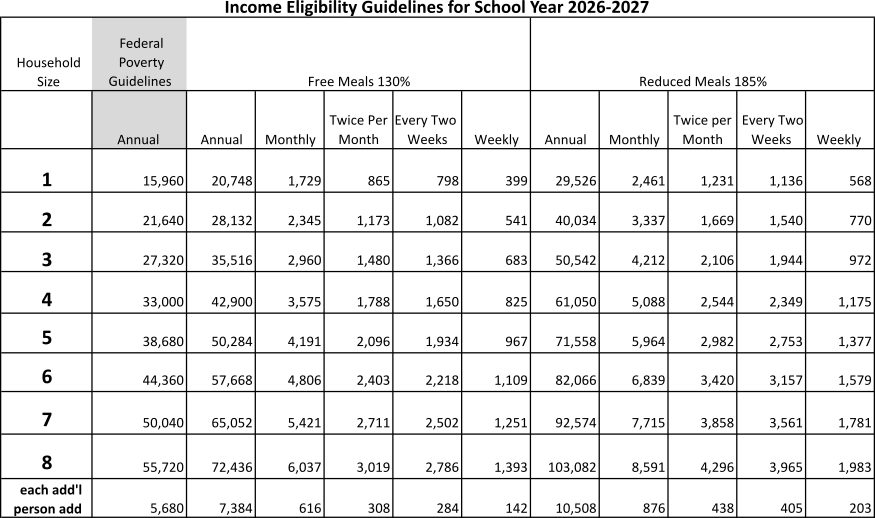
Arkansas Special Nutrition Program
NOTIFICATION TO THE COMMUNITY
Non-discrimination Statement
In accordance with Federal civil rights law and U.S. Department of Agriculture (USDA) civil rights regulations and policies, the USDA, its Agencies, offices, and employees, and institutions participating in or administering USDA programs are prohibited from discriminating based on race, color, national origin, religion, sex, disability, age, marital status, family/parental status, income derived from a public assistance program, political beliefs, or reprisal or retaliation for prior civil rights activity, in any program or activity conducted or funded by USDA (not all bases apply to all programs). Remedies and complaint filing deadlines vary by program or incident.
Persons with disabilities who require alternative means of communication for program information (e.g., Braille, large print, audiotape, American Sign Language, etc.) should contact the State or local Agency that administers the program or contact USDA through the Telecommunications Relay Service at 711 (voice and TTY). Additionally, program information may be made available in languages other than English.
To file a program discrimination complaint, complete the USDA Program Discrimination Complaint Form, AD-3027, found online at How to File a Program Discrimination Complaint and at any USDA office or write a letter addressed to USDA and provide in the letter all of the information requested in the form. To request a copy of the complaint form, call (866) 632-9992. Submit your completed form or letter to USDA by: (1) mail: U.S. Department of Agriculture, Office of the Assistant Secretary for Civil Rights, 1400 Independence Avenue, SW, Mail Stop 9410, Washington, D.C. 20250-9410; (2) fax: (202) 690-7442; or (3) email: program.intake@usda.gov.
USDA is an equal opportunity provider, employer, and lender.

Signs & Symptoms of Developmental Delay
Archild’s evidence-based, individualized intervention model supports the needs of children six weeks to six years of age with a variety of developmental disabilities. Our classroom and therapeutic programs address the associated developmental delays in order to maximize potential and independence in childhood and beyond. Read below to learn about the potential signs of developmental delay.
Possible Signs of Physical Delay:
By 9 months
- Doesn’t stand alone while holding on to something or walk sideways while holding on to furniture
- Doesn’t move from their back to sitting up without assistance
- Doesn’t hold an object in each hand at once
- Doesn’t bang objects and transfer from one hand to the other
- Doesn’t use arms to move forward on their belly
By 18 months
- Doesn’t scribble on paper
- Doesn’t squat then stand again maintaining balance
- Doesn’t demonstrate controlled starts and stops when walking
- Doesn’t creep backwards down steps
- Doesn’t pick up small objects with thumb and forefinger
By 36 months ( 3 years old)
- Doesn’t throw a ball overhand and catch a ball by trapping it on chest
- Doesn’t imitate circular, vertical and horizontal strokes on paper
- Doesn’t snip paper with scissors
- Doesn’t walk up stairs
- Doesn’t stand on one foot for a few seconds
- Doesn’t thread small beads on a string
By 48 months (4 years old)
- Doesn’t copy drawing a cross and square
- Doesn’t hop on one foot
- Doesn’t jump forward with feet together and jump over low objects
- Doesn’t walk down steps alternating feet
- Doesn’t run around objects and corners
By 60 months (5 years old)
- Doesn’t cut a straight line and simple shapes
- Doesn’t balance on one foot
- Doesn’t bounce and catch tennis ball
- Doesn’t color within the lines
Possible Signs of Language Delay:
By 9 months
- Doesn’t respond with appropriate gestures to “up,” “bye-bye,” or other routines
- Doesn’t use three or more consonants
- Doesn’t move body to music
- Doesn’t laugh out loud
- Doesn’t imitate sounds
- Doesn’t briefly stop activity when name is called
- Doesn’t vocalize pleasure and displeasure
By 18 months
- Doesn’t follow simple, spoken commands
- Doesn’t follow directions about placing an item “in” or “on” another
- Doesn’t use at least five words
- Doesn’t point to five or more familiar persons, animals or toys
- Doesn’t point to three or more body parts when asked
- Doesn’t indicate “yes” or “no” in response to questions
By 36 months (3 years old)
- Doesn’t identify common objects described by their use
- Doesn’t use sentences or three or more words
- Doesn’t use some regular plurals (e.g., boy – boys)
- Doesn’t understand “big” and “little”
- Doesn’t respond to “who” and “whose” questions
- Doesn’t ask “what” or “where” questions
- Doesn’t understand “beside” and “under”
By 48 months (4 years old)
- Doesn’t state full name
- Doesn’t name primary colors
- Doesn’t answer questions when told a short story
- Doesn’t use pronouns
- Doesn’t use facial expressions and body language to demonstrate emotions
- Doesn’t make statements about cause and effect
- Can’t define at least five simple words
- Can’t tell how simple objects are used
By 60 months (5 years old)
- Doesn’t identify rhyming words
- Can’t complete simple word analogies (e.g., “ice is cold; Fire is ____.”)
- Doesn’t use sentences with five or more words
- Can’t state similarities between objects
- Doesn’t respond to questions using time concepts (e.g., “When do you eat dinner?”)
- Doesn’t tell simple stories without picture cards
- Doesn’t participate in group discussion
- Doesn’t generate complex sentences
Possible Signs of Social-Emotional Delay:
By 9 months
- Doesn’t comfort self (e.g., sucks hand or thumb)
- Doesn’t express desire to be picked up and extend arms to familiar persons
- Doesn’t initiate social contact and express affection
- Doesn’t play simple games (e.g., peek-a-boo)
- Doesn’t respond differently to children and adults
By 18 months
- Doesn’t imitate facial expressions, actions and sounds
- Doesn’t bring toys to share with caregivers
- Doesn’t play well for a brief time in groups of two or three children
- Doesn’t separate from caregivers in familiar setting without crying
- Doesn’t attempt to comfort others in distress
- Doesn’t enjoy simple make-believe
- Doesn’t look to caregiver for reassurance when faced with a novel situation
By 36 months (3 years)
- Doesn’t look at people when speaking with them
- Doesn’t take turns
- Doesn’t recognize when another person is happy or sad
- Doesn’t claim certain things as being their own
- Doesn’t show affection to younger children by hugging and kissing
- Doesn’t repeat rhymes, songs or dances for others
- Doesn’t change activities when requested
- Doesn’t interact appropriately with others during group activities
By 48 months (4 years)
- Doesn’t share toys
- Doesn’t’ play group board or card game
- Doest quiet down after active play
- Doesn’t participate in circle games
- Doesn’t return objects to their appropriate place
- Doesn’t express anger with words rather than physical action
- Can’t except friendly teasing
- Doesn’t show empathy for others
By 60 months (5 years old)
- Doesn’t offer an item or activity to another in exchange for something else
- Doesn’t accept valid criticism
- Doesn’t talk about their feelings
- Doesn’t offer assistance to others
- Doesn’t help with group projects
- Doesn’t say “excuse me” to interrupt politely
- Doesn’t respond with appropriate affect or action in social situations